



Warehouse Management Systems Development
- Eliminate stock inaccuracies and poor inventory visibility across bins, zones, and warehouse locations
- Speed up picking, packing, and shipping by reducing manual steps and avoidable fulfillment errors
- Improve warehouse capacity planning with better use of space, staff time, and equipment


Benefits of custom WMS
Proper warehouse management software solutions make warehouse work easier in ways that the team can feel right away. These improvements matter even more when a business works with returns, high inventory levels, or different client rules. In these cases, a custom WMS helps the warehouse support the business more smoothly instead of slowing it down.
Better use of warehouse space
A warehouse management system can identify inefficient space usage faster and better than a human. This way, you can use your warehouse space more effectively and make it easier to move equipment within it.

Faster order fulfillment
When all the data needed for order management is within a single system, it takes less time to find the necessary merchandise, process the order, and dispatch it.
More accurate inventory control
Consolidating all the inventory management data within a single WMS improves visibility into stock levels, item locations, and inventory movement. This maximizes inventory accuracy and minimizes errors, especially for larger facilities.
Stronger warehouse processes
A proper warehouse management system makes all the workflows more efficient by connecting receiving, storage, picking, returns, and shipping inside one system with clear process logic.
Better support for automation
WMS enables warehouse automation by implementing scanners, mobile devices, labels, and other tools. All of these track and process warehouse data and order fulfillment, minimizing manual work.
Operational transparency
A WMS makes warehouse work more transparent for both operations and management. It gives businesses better visibility into staff workload, task execution, inventory movement, and key financial indicators tied to warehouse activity. Integrations with ERP/ERM systems, accounting, and delivery services help turn the WMS into a part of a connected ecosystem instead of another isolated tool
Brands we work with





Warehouse management software development services we provide
Our warehouse management software development starts with studying your operating model: how goods enter the facility, how they move, how staff complete tasks, and where bottlenecks appear. From there, we plan modules, mobile flows, devices, and reporting as one product. This is the basis of our warehouse management system development services, supported by practical management tools, solid software integrations, and ongoing support services.
Need a custom WMS that matches your warehouse logic and scales with demand? Talk to our team about the fastest route to launch.
Key WMS features
The right warehouse management system software works as a unified, modular platform rather than a set of disconnected tools.
- inventory receiving, putaway, and stock reservations with barcode checks and storage recommendations
- stock audits, inter-zone transfers, and custom inventory management rules that protect inventory accuracy
- order processing with status tracking, picking and packing logic, and customer notifications
- documents, labels, and printable PDFs for shipping and customs
- delivery integrations, carrier selection, and cost logic through software integrations
- returns handling with statuses, notifications, and replacement workflows
- staff dashboards, task assignment, productivity tracking, and project management view
- IoT-device integrations for warehouse equipment
When needed, custom WMS solutions can also accommodate AI-assisted search, task prioritization, and reporting layers that help supervisors spot issues earlier.

Why choose us as a warehouse management software development company
Our warehouse management system development process
Free consultation that saves you budget and months of work!
Frequently Asked Questions
What is warehouse management software development?
Warehouse management software development is the process of creating software that manages receiving, storage, stock control, picking, packing, shipping, returns, and related workflows within one platform.
How do warehouse management systems work?
A warehouse management system tracks goods as they move through receiving, storage, picking, packing, shipping, and returns. It helps track and manage all the warehouse-related operations inside one platform, often with integrations with ERP, CRM, carrier, and accounting tools.
How much does warehouse management software cost?
The cost depends on the scope of the system, the number of warehouse workflows involved, required integrations, user roles, reporting needs, and the level of customization. A simple solution for one warehouse costs less than a multi-location WMS with device integrations, automation, and advanced analytics. Contact us to receive an estimate for your platform.
Why should I invest in custom warehouse management software?
A custom WMS is a strong choice when your facility has specific workflows, device requirements, or integration needs that ready-made products do not handle well. It gives you a system that matches your process and supports future growth more cleanly.
What is the difference between WMS and ERP?
A WMS focuses on storage logic, inventory movement, warehouse tasks, and shipping activity. ERP covers a wider business environment that can include finance, HR, CRM, production, and logistics, and it may contain a warehouse management system module inside it.

.webp "Warehouse Management Systems Development - Picture №13")

.webp "Warehouse Management Systems Development - Picture №16")
.webp "Warehouse Management Systems Development - Picture №18")
.jpg "Warehouse Management Systems Development - Picture №19")
.webp "Warehouse Management Systems Development - Picture №20")
-(1).jpg "Warehouse Management Systems Development - Picture №21")

.jpg "Warehouse Management Systems Development - Picture №23")



They trust us


They demonstrated an impressive level of expertise in web development. They flawlessly executed complex functionalities and integrated custom features to meet our specific needs. The website they created functions seamlessly and aligns with our brand identity.


As a satisfied customer, I highly recommend Asabix to any organization seeking top-notch software solutions. With Asabix, you can rest assured that your expectations will be surpassed.


_80_80.webp "Etnodim")


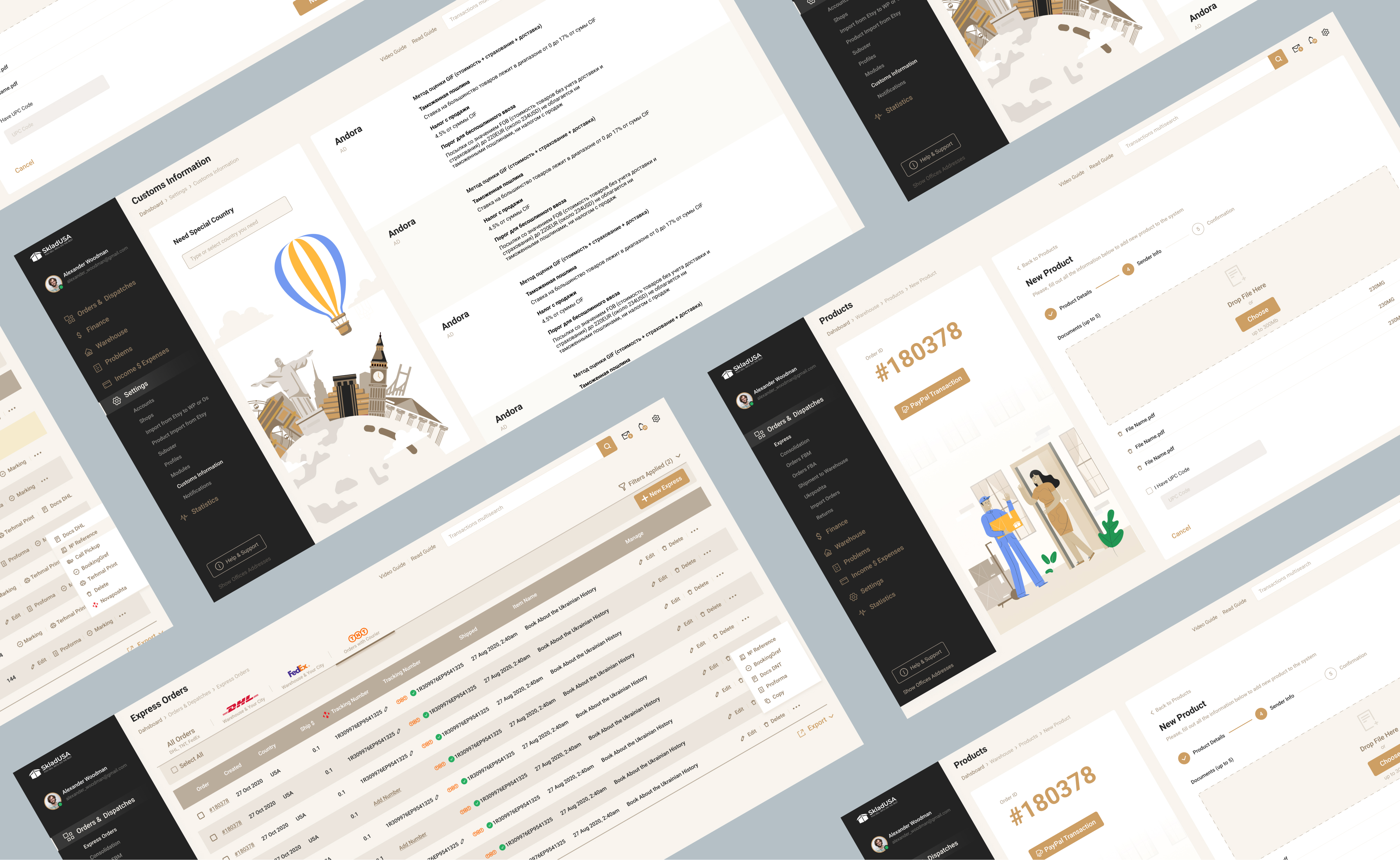
We run cross-border logistics, fulfillment, tracking, integrations, and a lot of moving parts. The system had to support real operational complexity.
Communication has been consistent, deadlines are generally respected, and when issues come up (because in tech they always do), they stay involved until things are resolved.
The SkladUSA system continues to evolve, and Asabix has been a reliable partner in that growth.