
- Picture №1
01

Turnkey ERP System Development

  • Manage all your business processes in one place
  • Reduce costs with intelligent automation
  • Make data-driven decisions with confidence
 
Stages
#0000

How we build ERP systems at Asabix?


Stages of work: from analytics to implementation
Tailored architecture for each business
Technology stack
Examples of custom modules

Stages of work: from analytics to implementation

Every project begins with a thorough business analysis. We conduct stakeholder interviews, map out current processes (“as is”), and identify bottlenecks. Next, we design the target model (“to be”) with clearly defined roles and process scenarios. At the architecture stage, we select the right technological approach (modular or microservices) based on project scale and flexibility requirements. During the development of ERP systems, we integrate new modules with existing systems such as accounting, CRM, WMS, TMS, or others. Before go-live, each solution undergoes load testing and multiple rounds of data validation to eliminate potential failures. The final step is staff training. We create instructions and accompany the client at all stages of the process.

Turnkey ERP System Development - Picture №5

Tailored architecture for each business

We do not offer universal templates; each digital platform that we build is tailored to specific business processes. For manufacturing companies, it can be an integrated suite with MRP, MES modules and quality control systems that operate in a unified environment. We offer custom ERP systems development services with complex logistics for distributors, including automatic order allocation and a flexible pricing system. Logistics providers benefit from high-performance architectures capable of processing large data volumes, integrated with TMS and IoT trackers. Each solution is designed with future scalability in mind, enabling businesses to expand operations without rebuilding the entire system.

Turnkey ERP System Development - Picture №6

Technology stack

Our primary backend framework is Laravel, paired with REST or GraphQL APIs for external integrations. For complex cases, such as desktop application development, we also use .NET. On the frontend, we work with Vue.js or React to deliver fast, responsive interfaces. WebSocket ensures real-time data updates, critical for warehouses, production facilities, and dispatch centers. Redis serves as a caching layer to boost performance, while AI-driven automation helps cut development hours and streamline processes. For scalability and reliability, we rely on Docker containerization and Kubernetes orchestration. CI/CD pipelines enable seamless updates without system downtime.

Turnkey ERP System Development - Picture №7

Examples of custom modules

In production, we implement MRP for product release planning, equipment loading control, and waste accounting. For warehouse processes, ERP contains a WMS module with addressable storage, barcoding, and support for mobile terminals. The TMS logistics module provides optimal route calculations, GPS integration, and automatic transportation pricing. For financial departments, we develop dashboards with forecasts of P&L, cash flow and liquidity. HR modules allow you to automate change schedules, tabulation, and bonus calculations. Individual industry clients receive a claim management module with automatic SLA tracking and customer notifications. For those who want to get the most out of the data, we are adding AI analytics that predicts demand, identifies anomalies in financial flows, and suggests optimal purchasing strategies.

Turnkey ERP System Development - Picture №8
Stages of work: from analytics to implementation

Stages of work: from analytics to implementation

Every project begins with a thorough business analysis. We conduct stakeholder interviews, map out current processes (“as is”), and identify bottlenecks. Next, we design the target model (“to be”) with clearly defined roles and process scenarios. At the architecture stage, we select the right technological approach (modular or microservices) based on project scale and flexibility requirements. During the development of ERP systems, we integrate new modules with existing systems such as accounting, CRM, WMS, TMS, or others. Before go-live, each solution undergoes load testing and multiple rounds of data validation to eliminate potential failures. The final step is staff training. We create instructions and accompany the client at all stages of the process.

Tailored architecture for each business

Tailored architecture for each business

We do not offer universal templates; each digital platform that we build is tailored to specific business processes. For manufacturing companies, it can be an integrated suite with MRP, MES modules and quality control systems that operate in a unified environment. We offer custom ERP systems development services with complex logistics for distributors, including automatic order allocation and a flexible pricing system. Logistics providers benefit from high-performance architectures capable of processing large data volumes, integrated with TMS and IoT trackers. Each solution is designed with future scalability in mind, enabling businesses to expand operations without rebuilding the entire system.

Technology stack

Technology stack

Our primary backend framework is Laravel, paired with REST or GraphQL APIs for external integrations. For complex cases, such as desktop application development, we also use .NET. On the frontend, we work with Vue.js or React to deliver fast, responsive interfaces. WebSocket ensures real-time data updates, critical for warehouses, production facilities, and dispatch centers. Redis serves as a caching layer to boost performance, while AI-driven automation helps cut development hours and streamline processes. For scalability and reliability, we rely on Docker containerization and Kubernetes orchestration. CI/CD pipelines enable seamless updates without system downtime.

Examples of custom modules

Examples of custom modules

In production, we implement MRP for product release planning, equipment loading control, and waste accounting. For warehouse processes, ERP contains a WMS module with addressable storage, barcoding, and support for mobile terminals. The TMS logistics module provides optimal route calculations, GPS integration, and automatic transportation pricing. For financial departments, we develop dashboards with forecasts of P&L, cash flow and liquidity. HR modules allow you to automate change schedules, tabulation, and bonus calculations. Individual industry clients receive a claim management module with automatic SLA tracking and customer notifications. For those who want to get the most out of the data, we are adding AI analytics that predicts demand, identifies anomalies in financial flows, and suggests optimal purchasing strategies.

 
Our clients
#0000

Brands we work with

img
img
img
img
img
img
img
img
img
img
img
img
img
img
img
img
Що таке ERP?
#0004

What is ERP, and when does a business need it?

ERP systems have become essential for companies that want to manage all processes from a single hub. At Asabix, we specialize in developing ERP software that integrates finance, logistics, manufacturing, and analytics into a single scalable platform. Let’s look at some examples:

Turnkey ERP System Development - Picture №9
Manufacturing
ERP provides end-to-end oversight, from raw material procurement to product release. It streamlines production planning, ensures compliance with standards, and improves traceability with batch and serial number tracking.
Distribution
Manage inventories across multiple warehouses, accelerate order processing, and automate pricing or discount rules for different customer groups. ERP boosts transparency and speeds up partner interactions.
Logistics
Organize address-based storage, monitor SLA agreements, and track shipments in real time. With ERP, logistics teams reduce errors, optimize routes, and deliver consistently better service.
Service companies
ERP becomes the single hub for managing projects, resources, and technical staff. It balances team workloads, improves task tracking, as well as ensures transparent, client-ready reporting.
Other industries
With its modular design, ERP adapts to any sector, from agriculture and real estate development to e-commerce, retail, or healthcare. It respects industry-specific processes while scaling effortlessly with your company’s growth.
Advantages
#0000

ERP system capabilities in practice

Order management and logistics
ERP is the leading platform for order management. It automatically reserves stock, streamlines order assembly, and prioritizes key customers in distribution. In logistics, the system integrates with TMS to calculate optimal delivery routes, factoring in traffic and warehouse capacity. Couriers receive tasks directly in mobile apps with built-in GPS navigation. ERP also links production schedules with shipping plans to ensure on-time delivery without creating excess inventory.
Workforce management
The HR module provides a unified environment for scheduling shifts. This allows for tracking working hours, and calculating compensation. This way. service companies gain flexibility by quickly assigning requests to field technicians, while manufacturers can balance shifts to optimize workload, improve efficiency, and reduce downtime. All workforce data integrates seamlessly into financial modules. The main benefit is that the system is delivering accurate cost allocation and clear business insights in real time.
Financial control and reporting
The platform provides management with up-to-date financial information for decision-making. In manufacturing, this includes P&L by workshop or product line; in distribution, margin analysis by sales channel. ERP also generates payment calendars, tracks accounts receivable and payable, and prepares automated reports for tax authorities or investors. Financial reporting cycles shrink from days to minutes, while built-in analytics help detect risks and trends early.
Integration with external services
Asabix ERP is designed as an open platform that integrates with CRM systems, accounting software, marketplaces, banking gateways, and BI tools. In retail, this means automatic price synchronization and stock levels across marketplaces. In manufacturing, it includes MES integration for real-time order tracking. Data exchange is handled through APIs, ETL processes, or webhooks, with adherence to security requirements. Our ERP and CRM development approach ensures systems run smoothly within one ecosystem.
AI and automation
We apply artificial intelligence to use cases that deliver measurable business value. Examples include demand forecasting based on seasonality and customer behavior, dynamic pricing in retail depending on market conditions, and anomaly detection to prevent production downtime. AI also automates management reporting and departmental performance analysis, enabling companies to respond quickly to market changes and stay competitive.
Quality and service management
ERP integrates quality control into all stages of business processes. For example, in service companies, the system monitors the implementation of SLAs, logs customer claims, and automatically notifies them of the status of the solution, which reduces the number of repeated requests and shortens the application closing time. For production, quality control in ERP allows you to quickly localize the problem and prevent defective products from reaching the customer.
web-applications-logistics-warehouse
Additional features
#0001

What challenges does the platform solve?

The principal value of an ERP solution lies in its ability to consolidate fragmented information streams into a single, real-time view of the business. The process begins by unifying data: financial indicators, inventory, production plans, and order statuses. This also includes resource management. Process automation reduces the time required to complete routine tasks such as document approval, report generation, and service accounting. This allows the team to focus on business development. This is confirmed by the experience of implementing a business solution for NewLifeAuto. Our custom ERP development solution centralized sales, procurement, and service accounting. We integrated financial systems, automated document generation, and streamlined order execution monitoring. As a result, the company gained transparent, cross-department analytics and cut customer request processing time significantly.
Services
#0005

Security and scalability as the foundation of ERP

01
Role-based and attribute-based access control (RBAC/ABAC)
We implement a detailed access control model that defines exactly who can interact with data and in what way. For standard scenarios, RBAC provides a precise distribution of permissions by role. For more complex use cases, we apply ABAC, where access is determined by additional attributes such as device type or user geolocation. This approach ensures strict control over access to critical functions and sensitive information.
02
Audit and activity logging
Every change within the ERP system is recorded in tamper-proof event logs. This allows you to see exactly who made changes, when they were made, and the full scope of actions. For manufacturing and financial modules, such traceability is essential for both internal reviews and external audits. Logs are stored in secure environments with restricted administrator access and can be used for incident investigations or compliance verification.
03
Encryption in transit and at rest
Data transfer between modules and integrated systems is carried out via TLS, which protects them from interception during movement. Critical information, including personal data, is encrypted in the database using AES algorithms. Encryption makes unauthorized reading impossible, even if the server is compromised, and ensures compliance with GDPR, ISO 27001, and other international information security standards.
04
Built-in compliance with GDPR and ISO 27001
Our ERP solutions development services are provided with regulatory and international standards in mind from the ground up. This includes personal data mapping, retention and deletion policies, and features that allow quick data access or deletion upon user request. For companies preparing for ISO 27001 certification or GDPR audits, the system is structured to meet key technical and procedural requirements from day one.
Asabix
#0004

Our advantages

Proven experience with large-scale operations
We have delivered ERP software development services for businesses where hundreds of users work simultaneously and thousands of transactions are processed every hour. In manufacturing, this has included integrating ERP with MES systems and equipment load planning. In logistics, our systems manage inventory and vehicle fleets in real time. This expertise enables us to account for peak loads during the design phase and build systems with the performance headroom needed for future growth.
Industry-specific customization
Every ERP we build is tailored to the client’s industry. For distributors, we develop modules for dynamic pricing and automated discount management. For service companies, we create solutions for queue management and dispatching field teams. For manufacturers, we integrate directly with machinery through OPC UA and other industrial protocols. Each module is fine-tuned to the client’s business logic, ensuring that the system includes only what delivers measurable value, with no unnecessary features.
Clients from the USA, EU, and the Middle East
Our solutions are used by companies from different regions and with different localization and legislative compliance requirements. In the USA, we implemented ERP with deep integration into financial reporting, in the EU – with full GDPR compliance, and in the Middle East, we adapted it to a multilingual interface and integrated it with local payment systems. This experience allows us to quickly adapt ERP to new markets without losing functionality.
Reviews
#0009

They trust us

Some Comments
We are very happy with the results! From the very beginning, the Asabix team exhibited a commitment to excellence and their performance exceeded our expectations on every front. Communication was seamless throughout the entire project. They were quick to respond to my inquiries, which helped us maintain a dynamic and efficient workflow. The quality of their work is truly outstanding.

They demonstrated an impressive level of expertise in web development. They flawlessly executed complex functionalities and integrated custom features to meet our specific needs. The website they created functions seamlessly and aligns with our brand identity.
feedback alt
Anna Schmitz
CFO, Superior Vending Inc.
Our partnership with Asabix has been in place for 5 years, and it's been a successful collaboration. We sought their expertise based on recommendations we received to finalize our existing online store and eventually develop a new, more technically advanced one that supports two languages and currencies for international shoppers. The outcome was perfect for us: the Laravel-based online store loaded quickly and displayed perfectly on mobile devices. It's worth mentioning that we frequently incorporate third-party services or follow specific recommendations from SEO agencies, and Asabix handled it all, saving us from unnecessary back-and-forth. This team helped us bring Ukrainian hospitality online and draw in new customers.
Etnodim
Iwan Korniychuk
Managing partner, Etnodim
Asabix's development team blew us away with their exceptional technical expertise and relentless dedication throughout the project development process. We've got a speedy website with an intuitive admin panel. The platform includes a helpful calculator for estimating global delivery costs. You can monitor real-time deliveries by initiating shipments, making payments, and receiving tracking numbers for parcels in your account. The system also features dedicated pages for payment history, address templates, and more. Both the website and account offer multiple language options. Furthermore, the account integrates various APIs of external services.
Turnkey ERP System Development - Picture №17
Svitlana Krytska
COO, Express Poshta
Asabix's efforts have increased the client's store visits and conversion rates. Asabix has adhered to deadlines and consistently and promptly attended to issues, even outside regular business hours. Their efficiency, flexibility, responsibility, and engaging approach are key elements of their work.
Turnkey ERP System Development - Picture №19
Evgeniy Marendich
Head of Marketing, EAT ME AT
Qualified employees work there. The company knows Laravel + VueJS well.
Turnkey ERP System Development - Picture №21
Oleksandr Polkhovskyi
CEO, Uland.ua
Been working with Asabix for a few months, been very happy with the service. Very quick at responding and providing great solutions. Would recommend them for any project in Laravel, and with API. Tried others before, glad I found them sooner than later.
Turnkey ERP System Development - Picture №23
Oleh Ladan
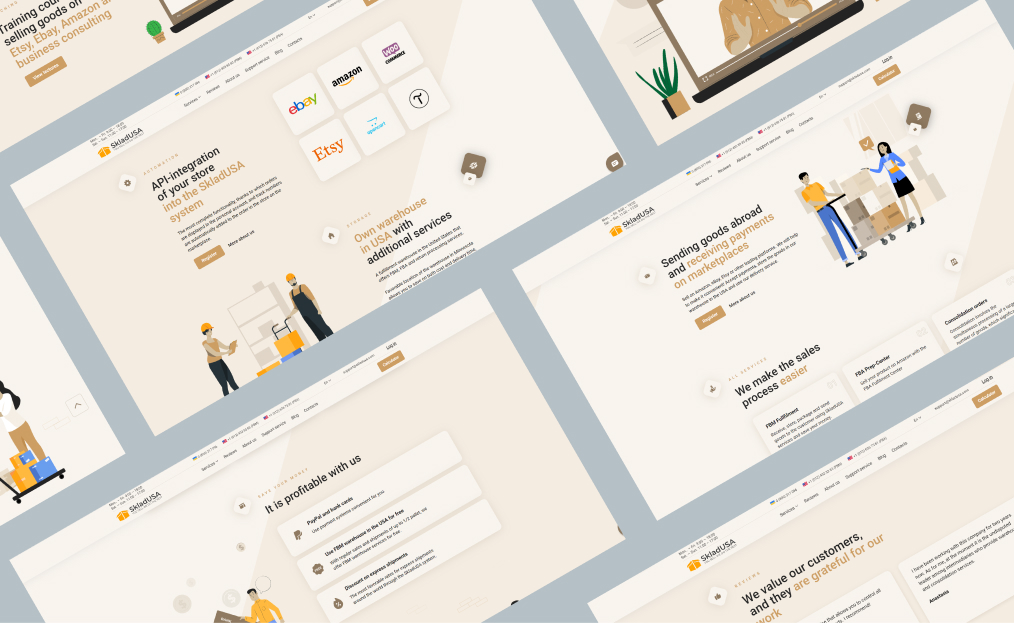
Skladusa
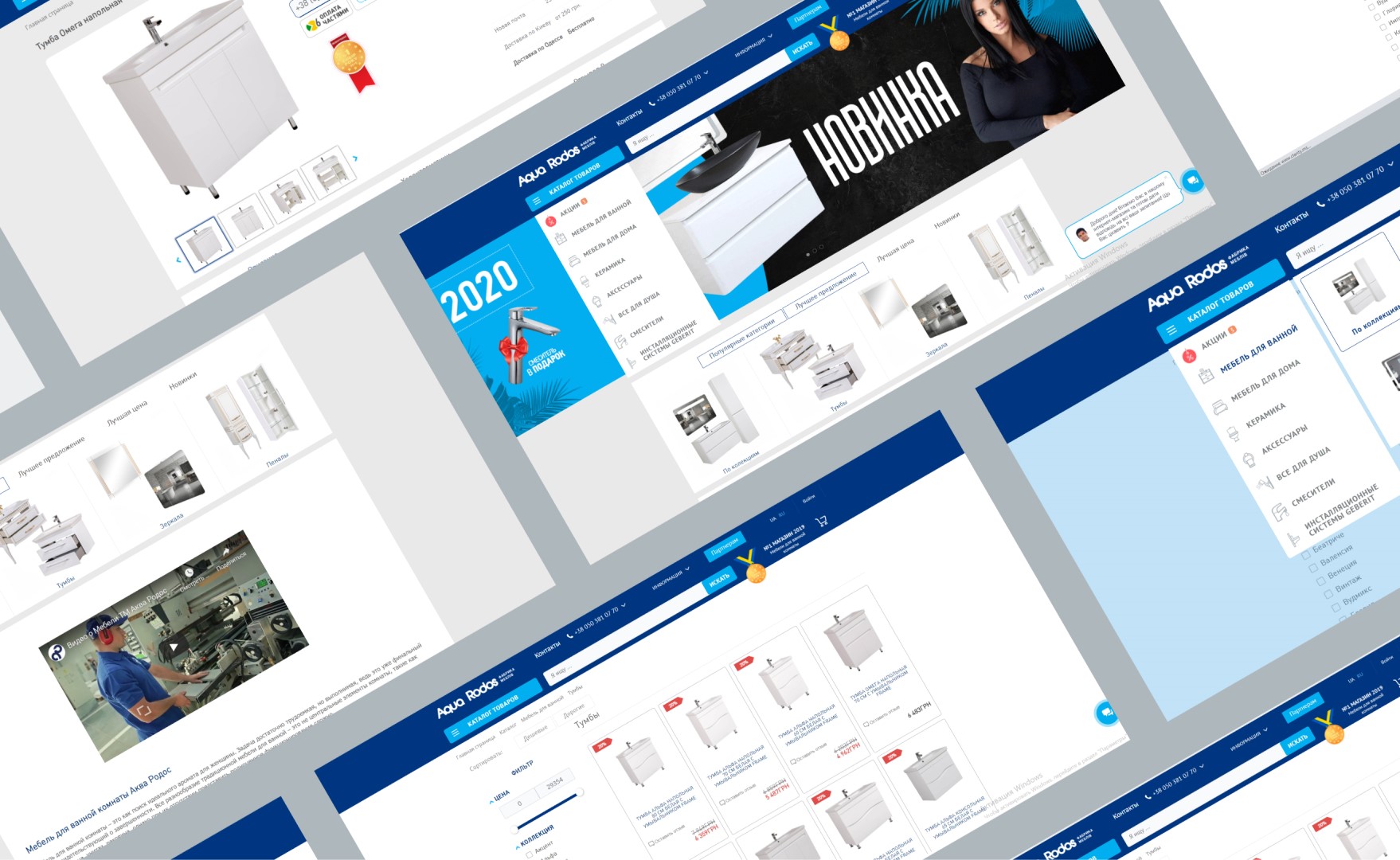
We hired Asabix to develop a website that would rank highly in search engines and have an up-to-date look. We needed to present our furniture series and collections online for many European countries. Our communication with the Asabix team was quick and straightforward, and the outcome was even better than we imagined: the website works flawlessly, and we also introduced loyalty programs and promotional subscriptions. The admin panel we received was user-friendly, allowing us to manage and launch the online store on time.
aquarodos.ua
Roman T.
Business development manager, Aquarodos
Stack of technologies
#0000

We use the best
technologies in our work

Turnkey ERP System Development - Picture №37
Turnkey ERP System Development - Picture №38
Turnkey ERP System Development - Picture №39
Turnkey ERP System Development - Picture №40
Turnkey ERP System Development - Picture №41
Turnkey ERP System Development - Picture №42
Turnkey ERP System Development - Picture №43
Turnkey ERP System Development - Picture №44
Turnkey ERP System Development - Picture №45
Turnkey ERP System Development - Picture №46
Turnkey ERP System Development - Picture №47
Turnkey ERP System Development - Picture №48
FAQs
#0006

Frequently asked questions answered

What is ERP, and how does it help businesses?

ERP (Enterprise Resource Planning) is an integrated digital platform for managing key business processes in a single environment. It combines production, sales, finance, logistics, HR and other areas into one system with a single database. With the help of the platform, managers receive up-to-date information in real time, make decisions faster, reduce errors, and avoid data duplication.

What modules can be added to ERP?

We provide custom ERP software development services with a set of modules tailored to meet individual needs. These can be:


  • MRP – production planning and control;
  • WMS/TMS-warehouse and transport logistics;
  • Financial modules – analytics, budgeting, cost control;
  • HR – personnel management, time management, change planning;
  • CRM – working with clients and transactions;
  • Quality control – audit of products and processes;
  • Claim work – accounting for complaints and service requests;
  • Integration with marketplaces and banking systems.
How long does implementation take?

The timeline depends on the size and complexity of the project. On average, a custom ERP implementation takes 4–12 months. The first weeks are dedicated to business analysis and architecture design, followed by ERP software development service, integrations, and testing. If you start with an MVP, a basic version can be launched in as little as 3 months, with additional functionality added later.

How is a custom ERP different from off-the-shelf solutions?

Ready-made solutions come with a fixed set of features, which often don’t align with your unique business processes. A custom ERP software development company builds software specifically around your workflows without unnecessary modules and with the flexibility to evolve. It integrates with your existing systems, follows industry standards, and meets local compliance requirements. Unlike boxed products, custom ERP development services are designed for scalability, support AI integration, and allow for interface customization and rapid adaptation to change.

How much does it cost to develop ERP systems?

The ERP development cost is formed taking into account the number of modules, the level of integrations and the amount of customization for specific business processes; the minimum price starts from $ 20,000. Infrastructure plays a role: cloud platforms (Amazon Web Services or Microsoft Azure) or simpler hosting on providers like GoDaddy allow for a quick launch. If the project requires advanced features such as AI-driven modules, the price is higher.

What is the ROI and business impact of ERP as an investment?

ERP is an investment in productivity and profitability. Process automation reduces operational costs, reduces order fulfillment time, and minimizes errors. According to our projects, ROI occurs 12-18 months after implementation. In distribution, the effect is usually expressed in optimizing inventory and reducing logistics costs, reducing waste in production, and increasing the volume of work performed in service companies without expanding staff.

When should I start with an MVP?

The Minimum Viable Product (MVP) version allows you to launch key modules faster and test their effectiveness in real-world conditions. For example, for a manufacturer, you can first implement MRP and warehouse accounting modules, and for a logistics operator, TMS with basic GPS integration and simple routing features. The gradual expansion of the functionality allows you to allocate a budget more efficiently and adapt the platform to user feedback.

What competitive advantages does AI provide in ERP?

AI transforms ERP from a record-keeping system into a strategic decision-making platform. Algorithms analyze large datasets in real time and recommend actions that directly improve profitability and efficiency. For businesses, this means:


  • Faster response to market changes;
  • Optimizing inventory and costs;
  • Loss prevention;
  • Improving the quality of service.
Can WMS, TMS, or CRM be ordered separately, or are they part of ERP?

ERP is an integrated platform, so WMS (Warehouse Management), TMS (Transportation Management), and CRM (Customer Relationship Management) can be fully embedded within it. This gives you a unified environment to manage inventory, logistics, finance, and customer relations without data duplication. At the same time, we also develop WMS, TMS, and CRM as stand-alone systems if your company only needs to automate a specific area. In both cases, our ERP solutions development services ensure the architecture remains flexible, so you can continually expand it later with new modules or integrations.

Development Of Internet Portals
 
Contacts
#0000

Ready to get started?
Reach out to us!

Address:

Ukraine, Zhytomyr
Vitruka Street, 9V

Shedule:

Mon – Fri, 9 am – 7 pm

Address:

Poland, Warsaw, 00-842
Łucka Street 15/204

Shedule:

Mon – Fri, 9 am – 7 pm


Contact us
#0000

Got a question?

Please fill out the form below, and our specialists will contact you as soon as possible!
By clicking the ‘Send’ button, you agree to the processing of personal data. Click to learn more.