




Content:

Published: 25.04.2025
Views: 4812
If your organization plans to develop custom software, you will inevitably come across .NET. Companies of all sizes use this powerful application development platform, from startups to large enterprises. This article will summarize the core components, strengths, and limitations of .NET. You’ll also learn what .NET developers do and how they help companies improve their products.
What is .NET?
.NET is a versatile development platform that allows you to create various applications, from web and desktop applications to mobile and IoT solutions.
What programming language does .NET use? The platform supports multiple languages, tools, and software components for data integration. One of its greatest strengths is seamless integration: applications written in different languages can work together within the .NET ecosystem.
To understand value of Dot Net development for businesses, let’s examine its key features and start with how it all began.
The evolution of .NET
.NET began with a clear goal: to standardize software development for the Windows platform. In 2002, Microsoft introduced the original .NET Framework, which was developed specifically for desktop and server applications on Windows. A short time later, the .NET Compact Framework was extended to the first mobile devices.
A significant milestone came in 2004 when Ximian (later acquired by Novell) launched Mono, an open-source implementation of .NET. This opened the door to cross-platform development and marked a turning point for the entire ecosystem.
In 2006, Microsoft released the .NET Framework 3.0, which was delivered with Windows Vista and Windows Server 2008 and further expanded the platform’s capabilities.
Between 2014 and 2016, .NET took a major leap forward with the introduction of .NET Core — a fundamental redesign that runs on Windows, Linux, macOS, iOS and Android. It was cross-platform and open source, and it signaled a fundamental shift in Microsoft’s approach to modern development.
For developers and businesses alike, this meant more flexibility, better performance, and access to a broader range of tools. Most .NET resources are free, making it an attractive choice for companies developing scalable, cost-effective software.
Today, the focus is on modern cross-platform versions such as .NET 5, 6, 7, and 8. The .NET Framework 4.8 is still around, but it is slowly being phased out in favor of faster, more powerful alternatives.
What is the .NET ecosystem?
The .NET ecosystem is a family of development platforms, each a powerful tool in its own right. Although they are all part of the same overarching system, each version is tailored to specific use cases. Here’s a quick overview of the main components:
- .NET Framework: the original, obsolete version of .NET, designed primarily for building Windows-based Desktop applications, web services, and more. It is still used in some enterprise environments, but it is not recommended for new projects.
- .NET Core: a modern, cross-platform version that runs on Windows, macOS, and Linux. Dot net core development is optimized for creating powerful websites, microservices, console applications, and more.
- Xamarin/Mono: Xamarin (based on Mono) allows you to create native Android and iOS apps with C# and .NET, often using cross-platform code.
- ASP.NET: is part of the .NET Core and .NET Framework. ASP dot net development or ASP dot net web development specializes in the web. Dot net development services give us a set of tools and features that help to optimize a website’s performance.
The platform also has understandable dot net web development tutorials for each of them.
What can you build with .NET?
One of the greatest strengths of .NET is its versatility for various projects, companies, and dot net development services. It supports many application types, making it a solid choice whether you’re developing for a startup, a growing mid-sized business, or a global enterprise. From internal tools to customer-facing applications, .NET provides everything developers need.
Desktop applications
Regarding desktop software development, .NET offers two solid UI frameworks: Windows Forms and Windows Presentation Foundation (WPF). They are ideal for creating rich, interactive user interfaces and reliable internal tools.
A great example is Paint.NET, a lightweight yet powerful image editing program developed entirely with .NET. Large companies like Intel use .NET to build everything from automation systems and analytics dashboards to high-end enterprise software.
Companies like Dell, Boeing, and Siemens also rely on .NET, from system control solutions to customized software for critical business processes.
Web applications
Web application development Dot Net is a robust platform for building dynamic websites, web applications, and back-end services, ideal for everything from lean e-commerce systems to complex enterprise systems.
Take nopCommerce, for example, an open-source e-commerce platform built on ASP.NET. It is the first choice for companies that need flexibility, scalability, and complete control over their online stores.
Another outstanding example is Xbox.com, which is part of the Microsoft ecosystem. It runs on .NET Core and uses a microservices architecture to handle massive traffic efficiently. The deep integration with Microsoft Azure enables smooth scaling and efficient cloud-native deployments.
And then there's GunBroker.com, a leading marketplace for firearms in the US. Built on .NET, it supports real-time auctions, payment processing, and identity verification with enterprise-level security features such as encrypted authentication, secure data processing, and comprehensive logging to meet strict compliance standards.
Mobile apps
Mobile is another area in which Android .NET development proves its versatility. With the Xamarin framework, developers can create fully native, cross-platform apps from a single codebase that run seamlessly on Android, iOS, and Windows.
A good example is Storyo — an app that turns your photos into short videos with music. It was developed with Xamarin and shows how polished and dynamic mobile experiences can be with .NET.
Cloud services
.NET is also great for the cloud. It’s designed to create secure, high-performance applications that scale effortlessly. When combined with Microsoft Azure, it becomes even more powerful, enabling developers to deploy, manage, and monitor applications reliably and efficiently.
Where is .NET used?
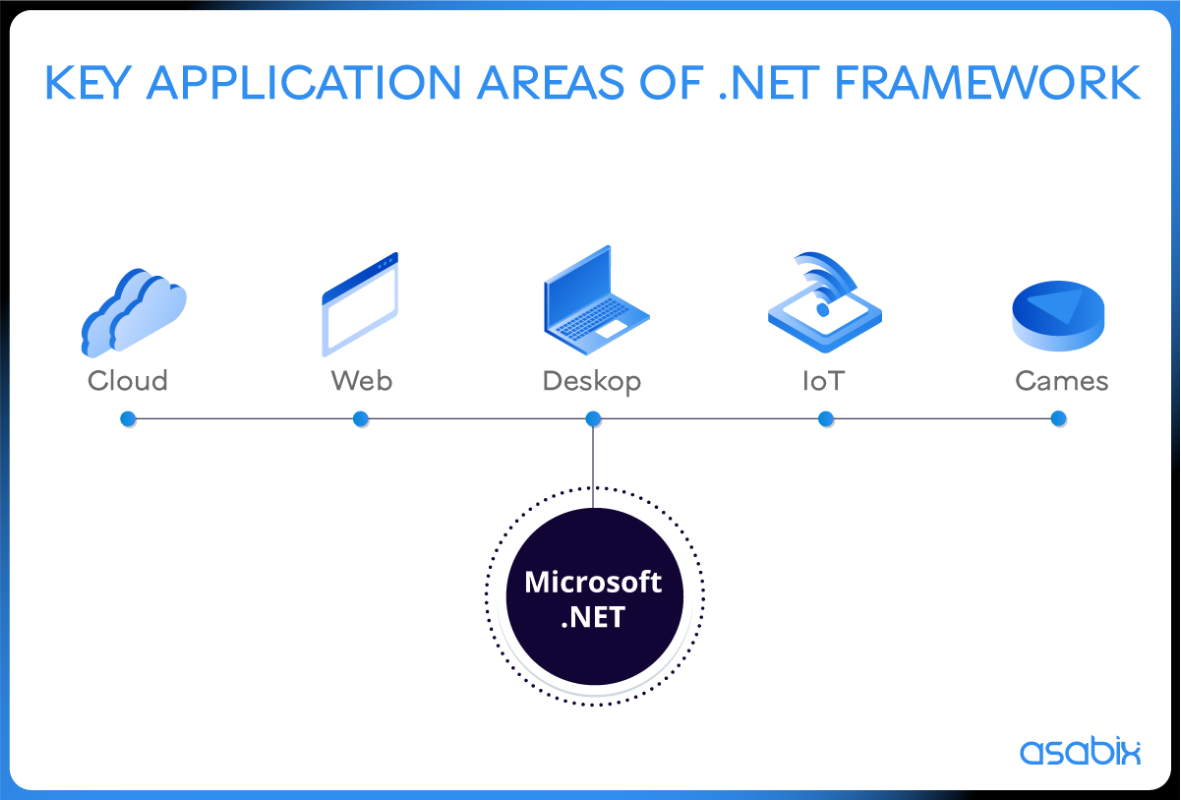
Let’s look at the industries and real-world scenarios where .NET brings significant business value.
Internet of Things (IoT)
The idea behind the Internet of Things (IoT) is simple: connect devices via the Internet to collect, exchange, and process data. .NET is well equipped for this. It provides a solid foundation for managing all devices, from smart home appliances to industrial equipment, and offers robust connectivity, real-time data processing, and secure communication between devices.
Game development
.NET may not be the first name that comes to mind regarding game development, but it’s there mainly thanks to Unity, a widely used cross-platform game engine based on .NET technologies.
Unity powers games for consoles, PCs, and mobile devices. For example, the popular Hearthstone Deck Tracker companion app was developed using .NET. In contrast, Unity was used for the critically acclaimed indie game Inside and Playdoku, a puzzle game developed by the Ukrainian studio Burny Games.
Microservices
.NET Core is also a good choice for developing microservices — an architectural approach in which an application is divided into smaller, self-contained services. Each service performs a specific function, runs independently, and communicates with the others via clearly defined interfaces.
This structure makes developing, testing, and deploying individual components easier without affecting the entire system. It also simplifies scaling, each microservice can grow independently as required. For companies, this means less central effort and more flexibility when managing complex applications.
APIs
APIs (Application Programming Interfaces) link systems and enable smooth, secure data exchange between different parts of a company or between different platforms.
With .NET, you get a complete set of tools to create powerful APIs that are reliable, secure, and easy to maintain. It's all there, from routing and data serialization to built-in security and support for versioning.
This versatility is exactly why .NET remains the platform for companies and developers looking to build connected, scalable, and future-proof solutions.
Enterprise development
Enterprise development involves developing software solutions for companies, not for individual users. These tools are used internally to manage workflows, streamline processes, and improve efficiency across the organization.
.NET is an excellent fit for enterprise systems, providing the flexibility, scalability, and security that large organizations need. Below are some of the most common types of enterprise applications developed with .NET:
- ERP systems (Enterprise Resource Planning) are used to manage budgets, production, logistics, and human resources in a unified platform. ERP software often includes accounting, asset management, cost tracking, and operational planning.
- HRM systems (Human Resource Management) are designed to simplify HR processes, from recruitment and payroll to employee development and performance tracking.
- Intranet systems support team collaboration with features such as document management, task tracking, internal messaging, and employee activity analysis.
- SCM systems (supply chain management) focus on optimizing logistics: managing resources, coordinating procurement, inventory, and supplier relationships.
- CRM systems (customer relationship management) help centralize customer data, improve relationship management, and boost sales performance through better communication and automation.
- BI tools (Business Intelligence) analyze business data, identify risks, gain insight,s and highlight trends to make better decisions.
- WMS (Warehouse Management Systems) help automate and optimize warehouse and logistics processes, from inventory tracking to order fulfillment.
- LMS (Learning Management Systems) supports online and in-house training by organizing courses, tracking progress, and managing certifications.
- MES (Manufacturing Execution Systems) helps monitor, control, and optimize manufacturing processes in real time.
With its robust ecosystem and enterprise-grade architecture, .NET remains the top choice for building complex business systems that grow with your business.
Why .NET is suitable for developers?
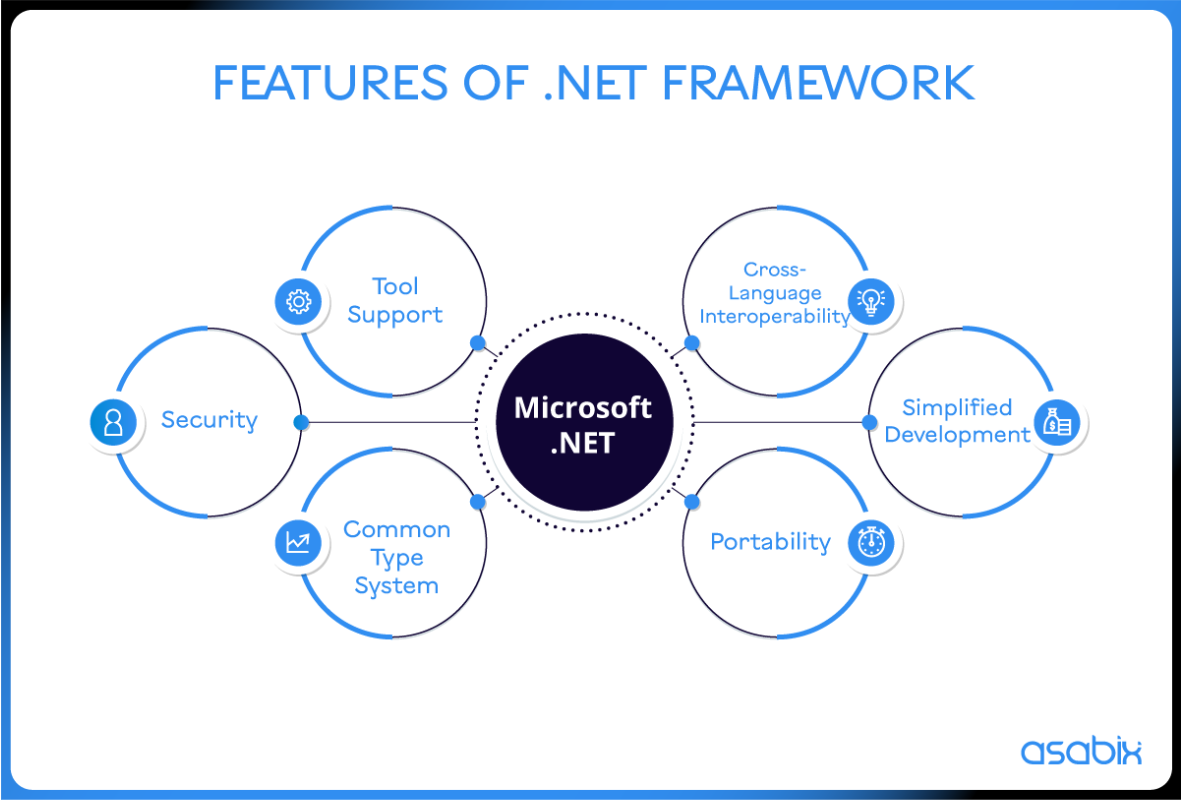
For developers, .NET offers a modern, flexible environment with many built-in benefits. Whether you’re developing for the web, desktop, mobile, or cloud, this platform is right for you. Here’s why developers stick with this platform:
- Cross-platform development. Create Windows, Linux, and macOS applications with the same framework and codebase.
- Optimized workflow. Standardized interfaces, powerful libraries, and tight IDE integration make the development process smoother and faster.
- Multilingual support. .NET supports multiple languages, including C#, F#, and JavaScript. Visual Basic is also available, especially for maintaining legacy applications. Developers can choose the most suitable tool for each project.
- Strong database integration. Work efficiently with SQL, NoSQL, and other data sources using integrated tools and libraries.
- Integration of third-party providers and services. .NET facilitates the integration of external libraries and services, so you can scale your application without starting from scratch.
- Cloud-ready. It works particularly well with Microsoft Azure, making it a solid choice for building and managing cloud-native applications.
- Built-in security. From memory isolation to exception handling to code security checks, .NET helps you build stable and secure applications from the start.
What does a .NET developer do
A .NET developer specializes in creating software with the .NET platform. This includes working with supported languages such as C#, understanding the ecosystem, and using the right tools for each project. Your role may vary depending on the company and the project, but it typically includes the following:
- Developing applications: web, desktop, mobile, cloud, or a mixture of all four
- Testing for bugs and performance issues
- Continuous improvement of usability, efficiency, and maintainability
- Maintaining and optimizing codebases
- Close cooperation with databases
An experienced .NET developer doesn’t just write code; they develop solutions tailored to the company and help companies work more efficiently through technology.
Top dot net development tools
.NET comes with a comprehensive toolkit that supports the entire lifecycle of an application. Here are the top 10 tools that developers often turn to:
- Visual Studio: a full-featured IDE for .NET development
- NuGet: dependency management and package distribution
- NCrunch: real-time testing and code coverage
- Chocolatey: Windows package manager for software distribution
- LINQPad: interactive query tool for LINQ and C#
- NDepend: analysis of code quality and technical debt
- ReSharper: improving code productivity for Visual Studio
- dotMemory: profiler for memory utilization
- dotTrace: performance and profiling tool
- NUnit: a popular test framework for .NET applications
Why .NET is a wise choice for businesses
So why are so many companies choosing .NET for software development? It’s all about reliability, scalability, and the availability of talent. Here are the key benefits for businesses:
Easier code management
.NET makes it easier to maintain, refactor, and update code, especially for long-term projects. This means fewer interruptions, smoother scaling, and more predictable company software growth. Especially in the context of web applications, companies often turn to asp dot net development services to easily scale their digital products as their needs evolve.
Designed for scaling
As your business grows, so can your application. .NET is designed to handle increasing complexity and traffic without the need for a complete rewrite. It’s no coincidence that major banks, media companies, and enterprise platforms have relied on .NET for years.
Large talent pool
Thanks to its popularity, .NET has a large global talent pool, making it easier to find experienced developers who can hit the ground running. This makes it easier to hire the right talent, whether you’re developing in-house or working with a development partner who truly understands your project's needs.
From MVPs for startups to enterprise-level ecosystems, .NET provides a solid foundation that helps organizations grow confidently and efficiently.
Are there disadvantages to .NET?
Like every technology, .NET has its disadvantages. Knowing these upfront can help developers and organizations make smarter decisions and avoid surprises. Here are a few areas you should be aware of:
Microsoft ecosystem lock-in
Although .NET Core is cross-platform and works well on Windows, macOS, and Linux, not all versions are equally flexible. Sometimes, you’re still working within the broader Microsoft ecosystem, which is often best combined with other Microsoft tools and services.
Versioning and compatibility
.NET evolves quickly, and that’s usually a good thing. However, frequent updates can sometimes break existing code or introduce unexpected changes. Older versions are also not always fully compatible with new or all operating systems. Compatibility issues may arise when working with older tools or non-standard configurations.
Performance and learning curve
Some .NET applications can be more resource-intensive than applications based on simpler frameworks. While .NET provides powerful tools, especially in terms of security, using them effectively may require more profound expertise. This might require additional training or hiring extra staff, potentially slowing down the process if you're not prepared.
Getting started with .NET
What makes .NET so attractive to businesses is its versatility. It scales well, is quick to customize, and supports almost any type of software you want to create.
The Asabix team is a competent dot net development company and ASP dot net development company: from web to desktop solutions. So if you are looking for an experienced .NET specialist, don’t hesitate to contact our team. Together, we will find the best .NET solution for your business.
Let's discuss your project
Blog
#0000
Read more articles in our blog
What is PWA: Comprehensive Guide with Code Samples
26 Feb, 2024
Progressive Web Apps are web applications that bring best web and mobile features. PWAs are similar to native apps in functionality and can be used on any device with a web browser.
VIEW ARTICLE
-compress.jpg "The .NET Platform: How It Works and Why It Matters for Businesses - Picture №6")
Outsourcing and outstaff: difference and features
20 Jul, 2023
Modern companies often have a need for fast and efficient development of software and other IT projects.
VIEW ARTICLE

Website Development Costs: What to Expect
08 Jan, 2025
Are you curious about the cost of creating a website? Discover how design intricacies, advanced functionality, and the type of site you envision can impact your budget.
VIEW ARTICLE
Why Do You Need a CRM System: Definition, Benefits, and Types
22 Feb, 2024
CRM is software for automating and managing customer interactions. Here, all data about the history of orders and sales, about each customer and his preferences, as well as about previous interactions of the brand with the consumer, are stored electronically.
VIEW ARTICLE