



Custom ERP Software Development Services
- Eliminate disconnected tools and scattered data that make daily operations unmanageable
- Reduce manual work, repeated data entry, and slow approvals that delay routine processes
- Gain clear visibility into finance, inventory, orders, and team performance inside one system



Custom ERP development services
Every ERP project starts with one question: which business problem should the system solve first? The systems we build are designed around your workflows and operations, including finance, production, inventory, and service coordination. The result is one connected system that brings planning, automation, reporting, and integrations together.
Our ERP platforms also support integrations with CRM, accounting software, marketplaces, banking gateways, BI tools, WMS, TMS, and MES systems to best support your existing workflows.
For clients, this results in a more scalable and maintainable system. Instead of forcing teams to adapt to generic logic, we shape custom ERP software solutions around process rules, user roles, and reporting needs. The result is closer to a tailored ERP solution than a lightly configured product.
Need one ERP environment that simplifies daily work and gives management a clearer view of the business?
Brands we work with





How a custom ERP solution works
A modern enterprise resource planning system serves as a unifying platform where departments can collaborate and operate on the same orders. An example of how it can help real teams:
- A sales team creates an order in the Order Management module
- The warehouse team sees the reservation in the Inventory module and begins processing the order.
- In the Accounting module, the finance team sees the payment status, enters it into the financial system, and, if needed, follows up on it.
- The operations team sees the delivery deadline in the Logistics module and arranges it.
- Management uses the BI module to oversee the whole process and track its imact on margins and workload for better data-driven decision-making.
In practice, this means fewer routine delays, lower operating overhead, and faster decision-making, which directly improves operational efficiency and long-term profitability.

Custom ERP software: key capabilities
The right capability set grows out of the company’s operating model and the places where manual work, delays, and data gaps hurt performance most. Every custom ERP software development company must focus on modules that support natural workflow without disrupting it.
Commercial and customer operations
A strong ERP can support order management, pricing rules, account history, and service tracking. Our solutions include customer order management, sales workflow automation, shipment notifications, and retention support. For service-heavy operations, ERP software can also include claim management and SLA tracking, which makes the ERP part of the service model instead of a back-office-only tool.

Finance, reporting, and control
ERP platforms can generate payment calendars, track receivables and payables, and compress financial reporting cycles from days to minutes. Other features include invoice processing, tax handling, payroll, general ledger, and financial reporting. For companies replacing fragmented tools, that level of control turns critical ERP software into a more reliable source of truth.
Production, warehouse, and logistics
ERP becomes especially useful when operations depend on timing and material flow. The most usable modules in this context are those for MRP, WMS, TMS, equipment load planning, barcoding, GPS integration, and transportation pricing. Depending on your operations, you can also have production planning, quality inspection, procurement, warehouse inventory, and delivery management.
Workforce, projects, and analytics
ERP can also connect people planning with business performance through its shift scheduling, compensation logic, and AI-driven analytics for demand forecasting, anomaly detection, and purchasing suggestions. This can be complemented by HR management, KPI assessment, sales forecasting, and operational intelligence. For some businesses, this also extends into app development for field teams or dispatch scenarios that need mobile access and real-time updates.
Security, integrations, and data continuity
ERP systems act as open platforms with secure integration, plus RBAC/ABAC access control, audit logging, and encryption in transit and at rest. These capabilities are as critical as core features because data management solutions, ERP integration, and controlled deployment determine whether the system remains dependable under real conditions.
Custom ERP solutions vs platform-based ERP software
| Criteria | Custom ERP | Platform-based ERP software |
|---|---|---|
|
Best fit
|
Companies with strict business process logic or unusual user roles |
Companies whose processes can adapt to vendor-defined patterns |
|
Functionality
|
Defined by the client and tailored to the exact project scope |
Defined by the vendor, with standard modules and settings |
|
Customization
|
Deep customization of workflows, permissions, and data models |
Limited to built-in settings, extensions, and vendor constraints |
|
Integrations
|
Easier connection to internal tools, external services, and legacy systems |
Stronger with popular apps, but more difficult with older or custom tools |
|
Change management
|
Lower pressure on internal teams because the ERP reflects existing work patterns |
Teams often have to adjust established processes to fit the tool |
|
Scalability
|
Designed to stay scalable as operations, roles, and data volume grow |
Bounded by the vendor roadmap and architecture |
|
Security and compliance
|
More control over architecture, access rules, audit logic, and industry obligations |
Limited to what the vendor already supports |
|
Cost profile
|
Higher upfront cost, lower long-term lock-in risk |
Faster launch, but recurring subscription, customization, and user-based fees can rise over time |
|
Payment model
|
Usually on a monthly basis or a similar subscription-based model |
A single payment for the whole system |
Free consultation that saves you budget and months of work!
Our ERP software development process
Common industries we serve
Each industry works differently, so ERP has to reflect the way the business actually operates. We adapt every solution to your company’s structure and workflows to improve teams’ efficiency and allow you to manage core processes in one connected system.
Why Asabix for custom ERP development?
They trust us


They demonstrated an impressive level of expertise in web development. They flawlessly executed complex functionalities and integrated custom features to meet our specific needs. The website they created functions seamlessly and aligns with our brand identity.


As a satisfied customer, I highly recommend Asabix to any organization seeking top-notch software solutions. With Asabix, you can rest assured that your expectations will be surpassed.


_80_80.webp "Etnodim")


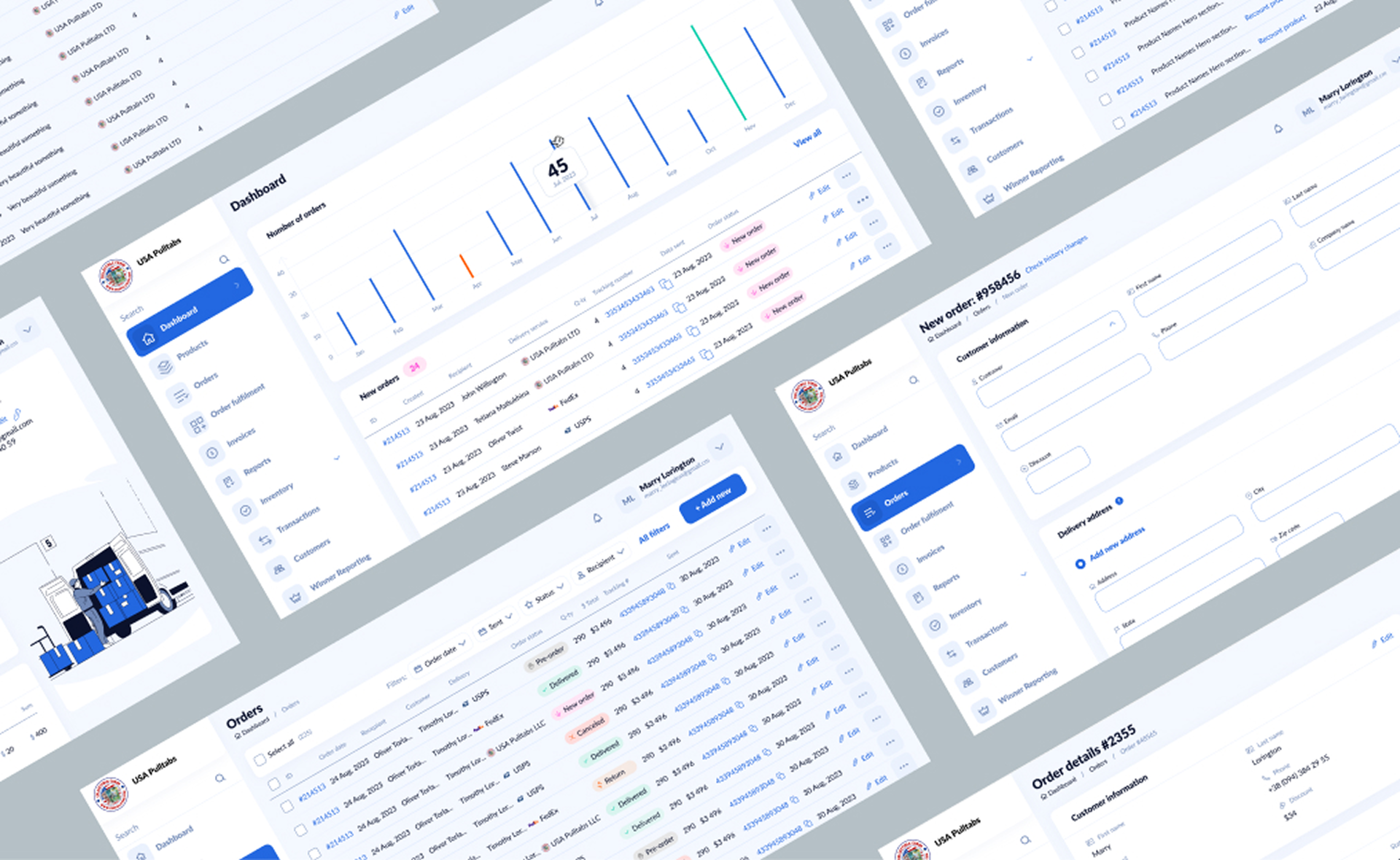
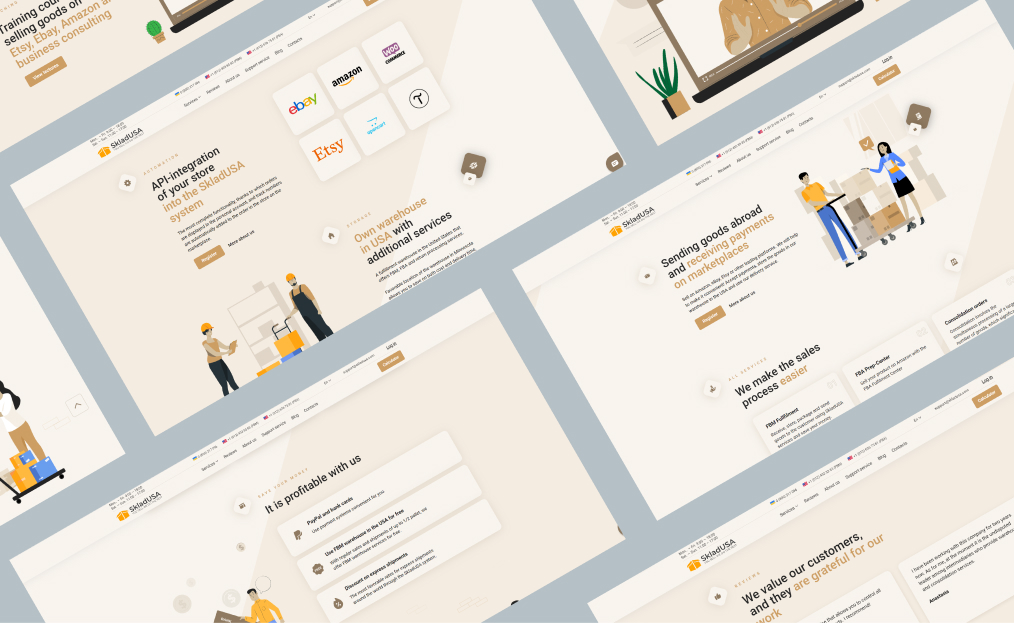
We run cross-border logistics, fulfillment, tracking, integrations, and a lot of moving parts. The system had to support real operational complexity.
Communication has been consistent, deadlines are generally respected, and when issues come up (because in tech they always do), they stay involved until things are resolved.
The SkladUSA system continues to evolve, and Asabix has been a reliable partner in that growth.


.webp "Custom ERP Software Development Services - Picture №33")
.webp "Custom ERP Software Development Services - Picture №34")
.jpg "Custom ERP Software Development Services - Picture №35")
.webp "Custom ERP Software Development Services - Picture №36")
_4056_2492.webp "Custom ERP Software Development Services - Picture №38")

-(1).jpg "Custom ERP Software Development Services - Picture №42")
.webp "Custom ERP Software Development Services - Picture №43")
.jpg "Custom ERP Software Development Services - Picture №44")


We work using
the best technologies
Frequently Asked Questions
How do businesses benefit from custom ERP development?
Improved data management, process speed, and cross-team communication are the key benefits of ERP. A customized ERP reduces manual labor, enhances reporting, and provides management with a more transparent foundation for daily decisions.
What is the timeline for ERP software development?
The timeline depends on the complexity and the scope of the project. An average custom ERP development and implementation takes 4-12 months end-to-end.
What are the benefits of outsourcing ERP software development?
Custom ERP development outsourcing can provide a business with quicker access to experts in architecture, UX, backend, integrations, QA, and rollout support.
How to choose the right development partner for ERP software development?
Look for a custom ERP development services team that understands both processes and code. A good partner should be able to map real operations, design a realistic architecture, plan migration carefully, and support the system after launch. At Asabix, we offer all of the above, as well as phased implementation, transparent communication, and ongoing partnership across the product lifecycle.
What are the common challenges in ERP development?
The hardest parts in ERP development services are usually unclear requirements, conflicting workflows between departments, fragile integrations, poor user adoption, and weak migration planning.
How to ensure no data loss during migration from off-the-shelf ERP to a custom ERP solution?
The best practice is to have multiple rounds of data validation before going live and use reliable migration tooling as a key part of custom ERP delivery.
What AI functionality can be added to an ERP system to support my business goals?
A custom ERP development company can implement AI-powered demand forecasting, dynamic pricing, anomaly detection, automated reporting, departmental performance monitoring, and purchase recommendations.
Can a custom ERP integrate with existing external systems and services?
Yes. ERP is an open platform that can connect to CRM, accounting software, marketplaces, banking gateways, BI tools, WMS, TMS, and MES via APIs, ETL processes, or webhooks.
How much does a custom ERP system cost?
The cost of a custom ERP system depends on the number of modules, industry logic, compliance needs, interface complexity, integrations, and the amount of migration work. Custom ERP development has a higher upfront cost, while ready-made products can create high long-term costs through licenses and add-ons.